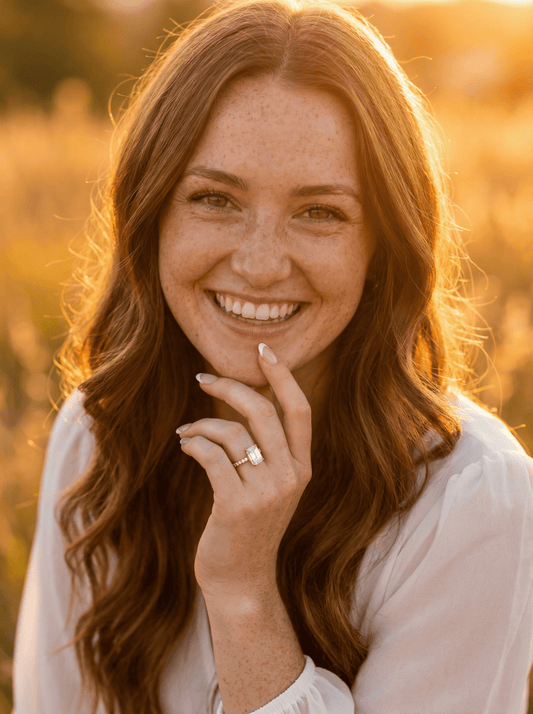
Diamond Rings
Read Description Close Description
Our diamond engagement rings collection covers 97 designs in both natural and lab-grown diamond. Every diamond is IGI certified for cut, colour, clarity and carat, conflict-free, and set in solid 9K, 14K or 18K gold or 950 platinum. Prices start at AU$1,050 for diamond wedding bands and AU$2,150 for diamond engagement rings, making us one of the most affordable certified diamond retailers in Australia.
97 diamond designs across every cut and setting
The collection runs across every popular cut — oval, round, emerald, princess, radiant, elongated cushion and pear. Setting styles span solitaire, half pavé, hidden halo, trilogy, side stone, leaf and east-west bezel. Round, oval and emerald solitaires start at AU$2,150–$2,350 with a 1ct lab-grown diamond centre stone. Hidden halo designs run AU$2,450–$2,750. Diamond wedding bands (cluster, curved cluster, half pavé, full pavé with peak) start at AU$1,050. The same designs are available in moissanite at lower price points — see our moissanite engagement rings collection for direct comparison.
Full IGI certification, lifetime warranty, Australian made
Every diamond ring ships with the full IGI certificate, free Australia-wide insured delivery, and our lifetime warranty plus free resizing. We stock both lab-grown and natural diamonds — lab-grown is typically 40–60% less than a natural diamond of equivalent cut, colour and clarity, and is physically and chemically identical. The IGI certificate will specify which type your diamond is. Want to compare side by side? Book a Melbourne showroom appointment and we'll display moissanite, lab-grown diamond and natural diamond next to each other under a jeweller's loupe.
Diamond engagement ring FAQ
What's the difference between lab-grown and natural diamonds?
Lab-grown diamonds are chemically, physically and optically identical to natural diamonds — same carbon crystal structure, same hardness (10 on the Mohs scale), same fire and brilliance. The only difference is origin: lab-grown is created in a controlled environment over a few weeks; natural diamonds form over billions of years. Lab-grown is typically 40–60% less expensive at the same 4Cs grading.
Are the diamonds in this collection certified?
Yes. Every diamond — natural or lab-grown — ships with a full IGI grading report covering the 4Cs (cut, colour, clarity and carat). The certificate is included in your delivery and matches the inscription on the diamond's girdle.
Should I choose moissanite or diamond?
Both are excellent. Moissanite offers higher fire (more rainbow flash), 50–70% lower cost than equivalent lab-grown diamond, and 80%+ savings vs natural diamond. Diamond has stronger long-term resale value and is the traditional choice. Read our full comparison: moissanite vs diamond guide.
Browse 97 diamond ring designs below or compare with moissanite alternatives at lower price points.
-
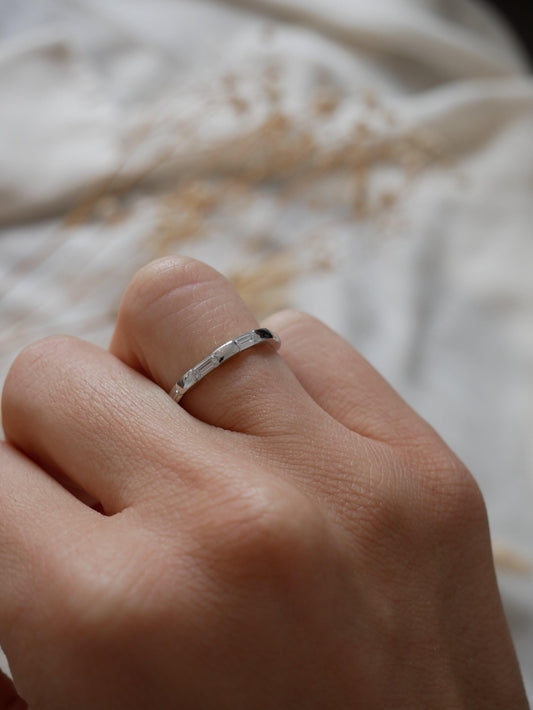
Emerald Diamond Wedding Band
Regular price From $1,200.00 AUDRegular priceSale price From $1,200.00 AUD -
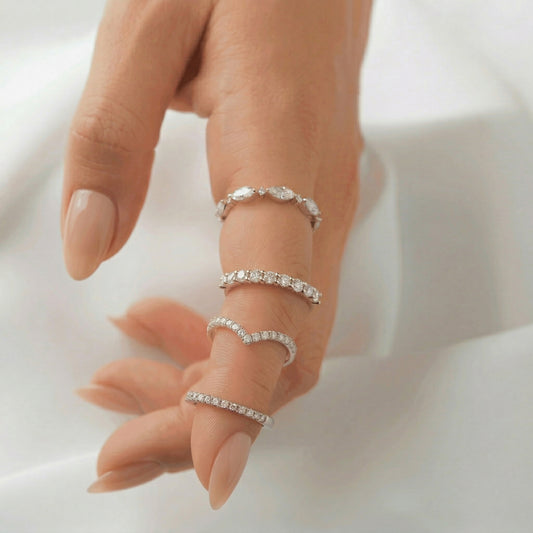
Half Pavè With Peak Diamond Wedding Band
Regular price From $1,200.00 AUDRegular priceSale price From $1,200.00 AUD -
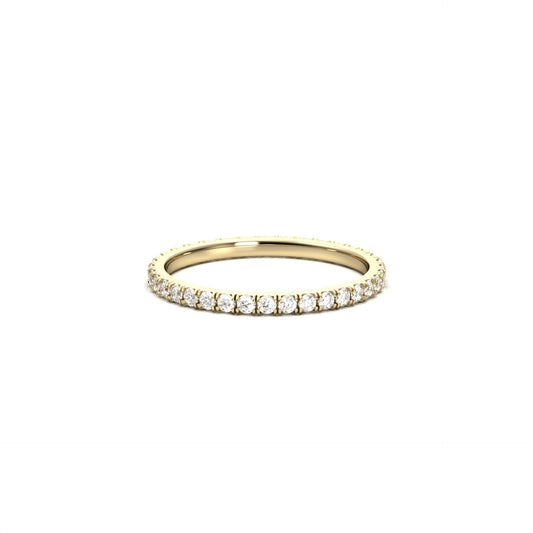
Full Pavè Diamond Wedding Band
Regular price From $1,200.00 AUDRegular priceSale price From $1,200.00 AUD -
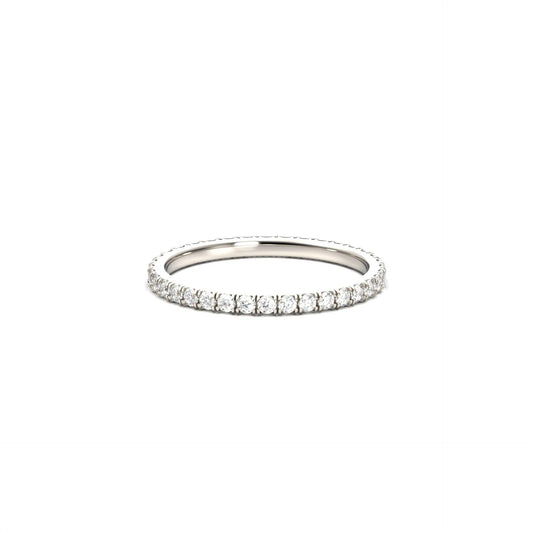
Avery — Emerald Hidden Halo Full Pavé Diamond Ring
Regular price From $2,550.00 AUDRegular priceSale price From $2,550.00 AUD
Frequently Asked Questions About Moissanite Engagement Rings
Q1: What is the difference between moissanite and a real diamond?
A: Moissanite is a lab-grown gemstone with brilliance, fire, and clarity that rivals a natural diamond. Side by side, most people cannot tell them apart visually. Three differences worth knowing: moissanite throws slightly more fire (rainbow flashes) than a diamond because of its higher refractive index; it scores 9.25 on the Mohs hardness scale (a natural diamond is 10); and it costs around 10% of an equivalent-size diamond. Every moissanite we set is lab-grown, conflict-free, and traceable.
Q2: Will my moissanite engagement ring look like a real diamond?
A: Yes. Today's moissanite is engineered to be near-colourless and exceptionally clear, and to the naked eye it is virtually indistinguishable from a diamond. Even jewellers usually need specialised testing equipment to tell them apart. The most obvious difference is actually MORE sparkle — moissanite has a higher refractive index than diamond, so it can throw slightly more colourful flashes in bright light. Most people who notice the difference do so because the ring sparkles more, not less.
Q3: Can I customise the metal, stone size, or setting?
A: Yes — almost every ring in our collection can be customised. Choose 9k, 14k, or 18k gold (white, yellow, or rose), or platinum. Centre stones range from 1ct to 8ct as standard, with larger sizes available on request. Settings include solitaire, bezel, halo, hidden halo, three-stone, and accent-stone designs. For fully bespoke work, book a free consultation at our Melbourne studio in Southbank or via video call. Custom-made rings take 4 to 6 weeks to complete.
Q4: Is moissanite durable enough for everyday wear?
A: Absolutely. Moissanite scores 9.25 on the Mohs hardness scale — second only to diamond (10) — which makes it one of the hardest gemstones you can wear every day. It resists scratching, chipping, and clouding, and unlike many gemstones it will not lose its brilliance over time. Every ring we make comes with a lifetime warranty on the centre stone, so if anything ever happens we will repair or replace it.
Q5: How do I care for my moissanite engagement ring?
A: Caring for moissanite is straightforward. Clean it once a week with warm soapy water and a soft toothbrush, then dry with a lint-free cloth — this keeps it as brilliant as the day you collected it. Avoid wearing your ring during heavy gym sessions, swimming in chlorinated pools, or when using harsh chemicals (gardening or cleaning). Bring it in for a free professional clean and inspection every 6 to 12 months — included in our lifetime warranty.
Ready to find your ring?
Browse our collection or book a consultation to design something completely unique.