


Shop By Cut
View all-

Oval Moissanite Engagement Rings
Oval is the most-requested engagement ring cut in Australia, and it has...
-

Emerald Cut Moissanite Engagement Rings
The emerald cut is the quiet-luxury choice: a rectangular step cut with...
-

Marquise Moissanite Engagement Rings
The marquise cut, an elongated stone with pointed ends, carries genuine history....
-

Princess Cut
The princess cut is the bold, modern alternative to the round, a...
-

Radiant Moissanite Engagement Rings
The radiant cut combines the clean rectangular outline of an emerald cut...
-

Moissanite Pear Engagement Rings
The pear cut, a rounded brilliant at one end tapering to a...


What our customers say
Reviews on Trustpilot
Amazing customer service
Amazing customer service with all my ring purchases. Very personal and helpful with prompt communication. We live in WA and to have the trust in someone across the country with my wedding and engagement ring I wouldn't use anyone else! Thanks so much Jarod!
Expert in his craft
Jarod is hands down the most “invite him to nans Sunday roast” man of the century. He was so genuine from the moment he introduced himself and we were instantly at ease. His creative and professional insight was considerate of our hip pocket as well as longevity of the ring and design. We are so excited to have been able to easily design THE ONE together.
Highly recommended
Jarod has been amazing to work with. I landed on a custom design and am absolutely thrilled with the result. Beautiful quality and always very informative. I asked lots of questions and was always met with prompt and detailed responses. The turn around time was also really great from my first email enquiry, all the way through to collection.
Engagement Ring Experience
Jarod was very professional and helpful throughout the entire process. […] Would highly recommend this place and will be back again soon to select our wedding rings!
Incredible service!
Incredibly helpful with our quick turn around time. Especially Jarod for his efficiency and genuine care to give us the best experience and service. Couldn't be more grateful for these guys, we've recommended them to all our friends who are in the market for engagement rings!
New Designs
-
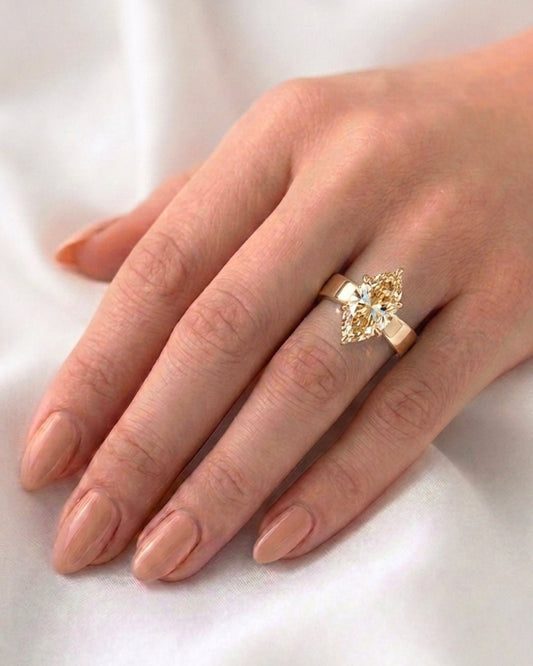
Lyra - Marquise Champagne Solitaire Moissanite Engagement Ring
Regular price From $1,800.00 AUDRegular price -
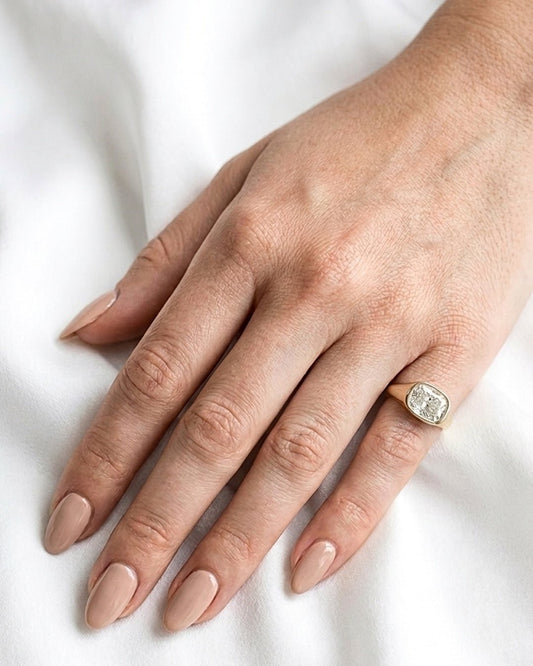
Freya: Elongated Cushion East West Bezel Solitaire with Signet Band Ring
Regular price Setting from $1,900.00 AUDRegular price -
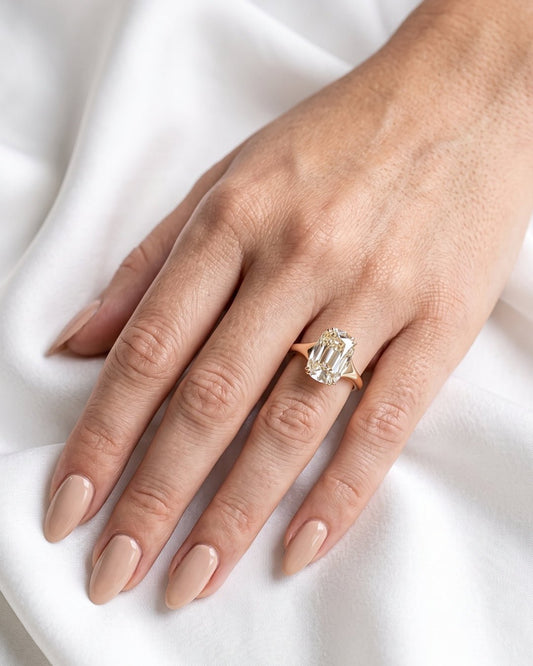
Blanche - Elongated Cushion Antique Cut Tapered Band Moissanite Engagement Ring
Regular price From $1,800.00 AUDRegular price -
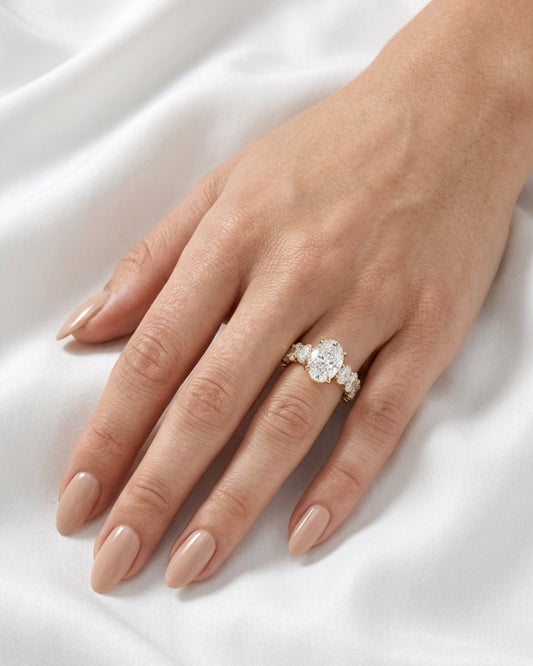
Eloise - Oval Solitaire with Oval Eternity Band Moissanite Engagement Ring
Regular price From $2,900.00 AUDRegular price -
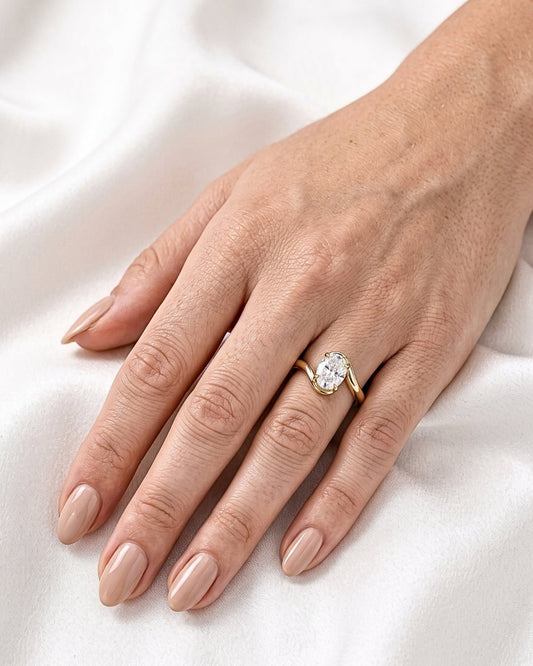
Saskia - Oval Solitaire Curved Band Moissanite Engagement Ring
Regular price From $1,800.00 AUDRegular price -
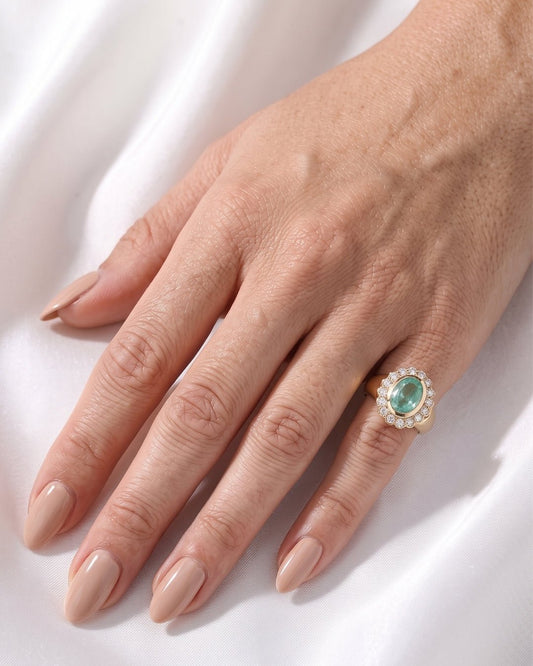
Amelia - Oval Sea Green Scalloped Halo with Signet Band Ring
Regular price From $1,900.00 AUDRegular price -
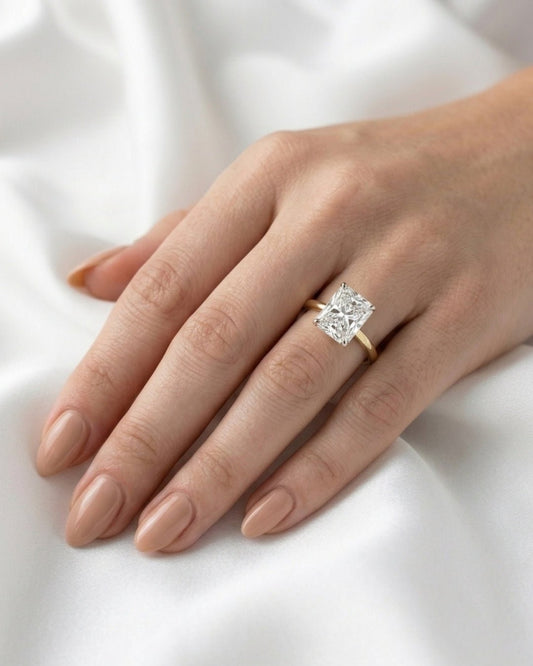
Astrid - Radiant Hidden Halo Moissanite Engagement Ring
Regular price From $1,800.00 AUDRegular price -
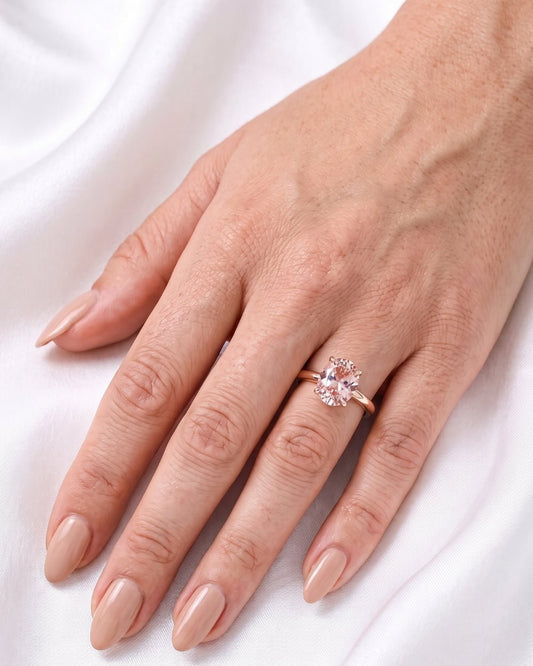
Aurora - Oval Solitaire Pink Diamond Engagement Ring
Regular price From $1,800.00 AUDRegular price










How it works
Start your way
Take the ring quiz, design in the ring builder, or book a consult.
Approve the design
You receive CAD renders of your ring and approve every detail before crafting.
Crafted and checked
Made to order, ready within 6 weeks. Express 3 weeks available.
Yours for life
Lifetime stone warranty. One complimentary resize within three months, subject to policy terms.
Considered design. Heirloom craft.
How to choose a moissanite engagement ring
Not sure where to start?
Side by Side
Moissanite vs Lab Diamond vs Natural Diamond
Find the right stone for your ring
|
More fire and brilliance
Moissanite
|
Physically identical to mined diamond
Lab Diamond
|
Traditional
Natural Diamond
|
|
|---|---|---|---|
| PriceRing pricing | See collection prices | See collection prices | Request a quote |
| EthicsOrigin | Man Made | Man Made | MinedSupply chain concerns |
| SparkleRefractive index | 2.65–2.69More colourful fire | 2.42Classic diamond brilliance | 2.42 |
| HardnessMohs scale | 9.25Excellent for daily wear | 10 | 10 |
| WarrantyLifetime stone warranty | Included | Included | Varies by jeweller |
| AppearanceVisual character | Diamond-like with extra fire | Physically identical to mined diamond | Traditional diamond |
| QualityColour and clarity | DEF VVS | DEF VVS | DEF VVS |
| CertificationGemological certificate | GRC certified | IGI or GIA certified | GIA certified |
CUSTOM DESIGN
Don’t see the ring you imagined?
Our generational jewellers can design exactly what you have in mind. Send a sketch, a reference photo, or just describe it — we’ll go from there. Design consultations by appointment, in our Melbourne studio or via video call.
Generate a design
and we'll send you a quote
FAQ
Find out more about our Moissanite Rings

Prices depend on your chosen stone, metal and design. Check the product page for current pricing and your selected options, or book a consultation for a personalised quote. Insured delivery within Australia is complimentary.
Most rings are made to order and ship within 6 weeks. Express domestic shipping in Australia is 1-4 business days; international shipping takes 1-2 weeks. We also have a small selection of ready-to-ship rings available for faster delivery. These can be re-sized and shipped within a few business days.
Need it sooner? Expedited orders can be turned around in 2-3 weeks for an additional $300 fee. If you're proposing on a specific date, contact us before ordering and we'll let you know whether your timeline is workable.
Lifetime craftsmanship warranty. Manufacturing faults are repaired at no charge for life. Damage from everyday wear or accidents is repaired at cost price, with a quote for your approval before work begins.
Eligible gemstones retain lifetime cover for their optical properties. See our full warranty policy for coverage and conditions.
Every ring is custom made for you, so we do not offer change-of-mind returns or exchanges. If you would like to change the design after purchase, we can discuss reworking it and provide a quote before proceeding. Returns for faults and your Australian Consumer Law rights remain unchanged.
A studio or video consultation can help you choose your design before ordering.
Yes. Almost every ring in our collection can be customised. Choose your metal (9k, 14k, or 18k yellow gold, white gold, rose gold, or platinum), the centre stone carat weight (typically 1ct to 5ct, with custom sizes on request), the band style, and the setting. For fully custom designs, design consultations are by appointment only, in our Southbank studio or via video call. Custom-made rings take up to 6 weeks to complete, depending on complexity.
We offer one complimentary resize within three months of purchase, up to four sizes up or down, or two sizes for pavé rings. Material restrictions and fees may apply. You cover postage to us; return postage is complimentary. See our warranty and resizing policy for details.
Yes. Our Southbank studio (Level 7, 80 Dorcas St, Southbank VIC 3006, Australia) is open by appointment for couples who want to see rings in person before deciding. Appointments are private. Just you, your partner if you're shopping together, and one of our jewellers. For couples elsewhere in Australia or internationally, we offer video consultations where we can show you rings on camera and walk through the design process. Both can be booked from the Book Appointment page.
Moissanite is offered in D–E colour and VVS clarity, with a certificate of authenticity. Lab-grown diamond grades depend on the selected stone; check its grading certificate for the exact colour, clarity and cut. Ask us about a specific grade before ordering.
Moissanite and lab-grown diamonds are both ethical, lab-created alternatives to mined diamonds. But they're different gemstones. Moissanite has more brilliance and fire than diamond (it disperses light more dramatically, creating that signature rainbow sparkle) and is significantly more affordable: a 1-carat moissanite typically costs around 10% of an equivalent lab-grown diamond. Lab-grown diamonds are chemically identical to mined diamonds and rank slightly higher on the hardness scale (10/10 vs 9.25/10 for moissanite). For most couples, the choice comes down to budget and aesthetic preference. We sell both. Book a consultation if you'd like to see them side by side.
For an engagement ring, yes. And in some ways better. Moissanite is the second-hardest gem used in jewellery (9.25 on the Mohs scale; only diamond is harder at 10), making it durable enough for daily wear. It has more fire and brilliance than diamond, meaning it sparkles more in motion. Where diamond wins is hardness and resale value. For a ring you wear every day for the rest of your life, the practical difference is invisible.
Moissanite passes basic diamond testers (the kind that measure thermal conductivity), so to most home testing kits it appears identical to diamond. More advanced testers that measure electrical conductivity. Used by jewellers and gemmologists. Can tell the difference. Practically: nobody will know it's not a diamond unless you tell them, and even most jewellers can only tell with the right equipment.
Carat is a measure of weight, not size. Because moissanite is about 15% lighter than diamond, a 1-carat moissanite is slightly smaller than a 1-carat diamond. Most jewellers describe moissanite by its diameter in millimetres rather than carat weight, since this gives you a more accurate sense of how the ring will look. A 6.5mm round moissanite is roughly the same visible size as a 1-carat round diamond.
Yes. Moissanite is a naturally occurring mineral (silicon carbide), first discovered in 1893 by Henri Moissan in a meteorite crater in Arizona. Natural moissanite is too rare to use in jewellery, so the moissanite sold today is grown in labs using the same crystal structure as the natural mineral. The lab-grown stones are chemically and optically identical to natural moissanite. They're just produced under controlled conditions rather than waiting millions of years for a meteor.